
El Torcal de Antequera: A Magical City of Stone
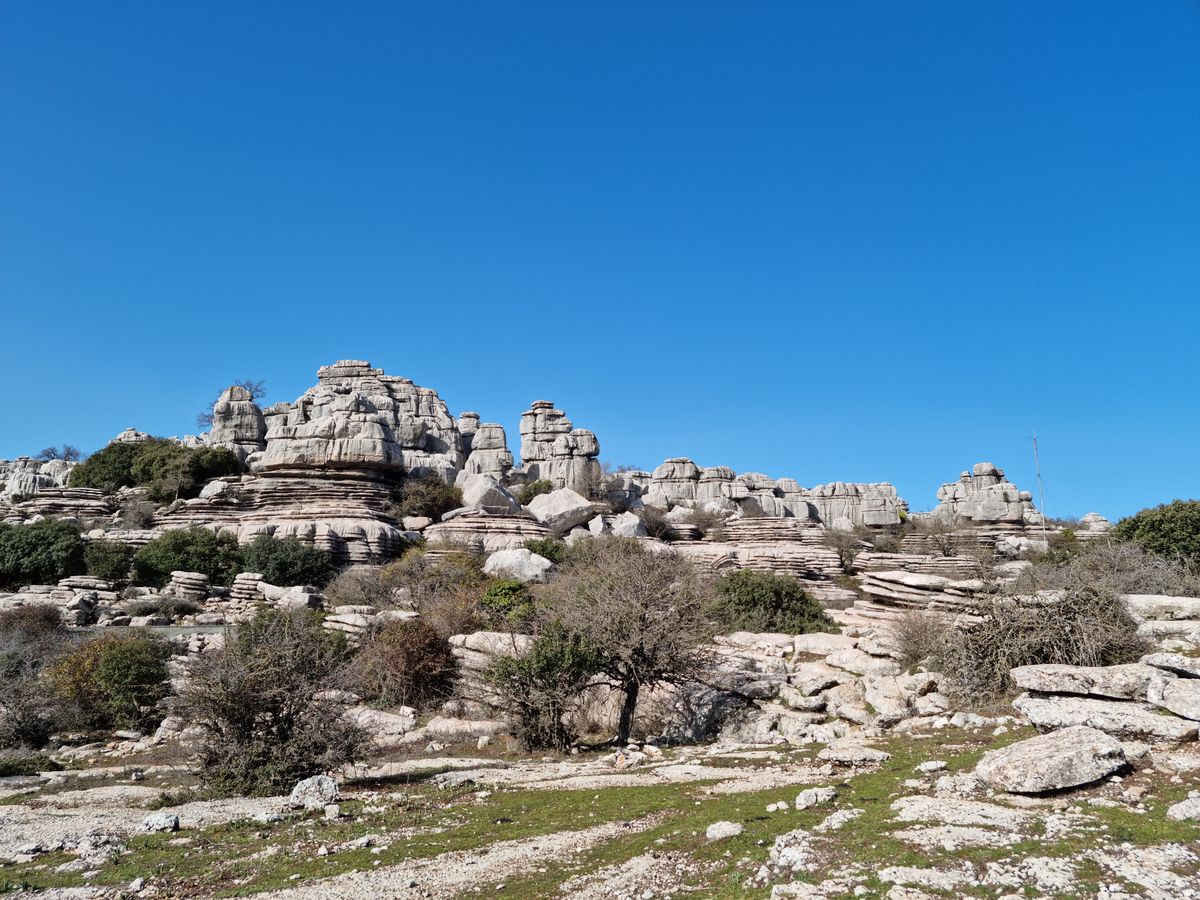
A Limestone Labyrinth Carved by the Wind Since the Jurassic
There are places that look like they belong to another world. El Torcal de Antequera is one of them. Declared a Natural Area, it lies within the municipality of Antequera, in the province of Málaga, and is one of the finest examples of karst landscape in all of Europe.
Málaga never ceases to surprise: Spanish fir forests, picture-postcard beaches, and then this — a stone labyrinth that defies logic. If you want to discover more of the province, check out our complete guide to Málaga.
A Landscape Sculpted Since the Jurassic
Spanning around twenty square kilometres, erosive forces — water and wind, above all — have been shaping the limestone rock since the Jurassic period, forming all manner of whimsical figures. The name “Torcal” comes precisely from the characteristic formations known as torcas or dolines.
After passing through the visitor centre — free and well put together — you step into a landscape that blows your mind. Wandering among these immense stones produces a magical sensation: it feels as if you are inside a labyrinthine stone city, making out among its towers figures that time has carved.
The Tornillo (the Screw) is the most recognisable, the emblem of the natural area. But there are also the Sombrerillo (Little Hat), the Jarra (Jug), the Cáliz (Chalice), the Aguja (Needle), the Esfinge (Sphinx), and all those that visitors go on to discover. Everyone sees something different.
Flora, Fauna, and a Sky Full of Raptors
It was declared a Natural Area in 1989 for the importance of its ecological values. Although the soil is not the most conducive to life, several typical plant forms stand out. One example is the “stone trees,” trees that grow whimsically in the cracks between the rocks. There are also endemic species such as a wide variety of wild orchids.
Birds are the star attraction. El Torcal is designated an SPA (Special Protection Area for Birds), and rightly so. Soaring above its rocks you can spot peregrine falcons, kestrels, sparrowhawks, various types of eagles, eagle owls, and griffon vultures. And with a bit of luck, among the rocks you might glimpse a mammal like the Spanish ibex, which turns a visit into something even more special.
Two Routes to Lose Yourself Among the Stones
There are two signposted routes. Both start from the visitor centre, share the first few metres, and end in the same place.
The Green Route covers the Upper Torcal over a distance of 1,410 metres. It takes about an hour without rushing.
The Yellow Route covers roughly 3,000 metres. It’s longer but presents no major difficulties or additional exertion.
Both let you observe the main rock formations, the plant life, and several bird species. They also lead to points from which you can admire the sea of stone and the Antequera mountain range in all its expanse.
There was a third route, but it’s temporarily closed for regeneration, though it can be visited for scientific purposes.
How to Get There
El Torcal sits in the heart of the province of Málaga, about twelve kilometres south of Antequera. From Antequera you can reach it via the regional road 3310 towards Villanueva de la Concepción. From Málaga city (about 42 kilometres), take the N-331 motorway, turning off at Casabermeja towards Villanueva de la Concepción and, six kilometres later, take the turn-off to El Torcal.
If you enjoy nature, don’t miss the Doñana National Park or the beaches of Cabo de Gata.
Frequently Asked Questions
How long do you need to visit El Torcal?
With the Green Route and the visitor centre, two hours is enough. If you do the Yellow Route or tend to stop a lot for photos, allow between three and four hours.
Is it suitable for children or elderly people?
The Green Route has no significant gradients and is suitable for almost everyone. The Yellow Route is longer but also without technical difficulty. That said, wear suitable footwear: the stones can be slippery.
What’s the best time of year to visit?
Spring and autumn. In summer it’s hot and there’s little shade. In winter it can snow and the rocks freeze, which is also spectacular, but you need to be better prepared.
Find places to stay in Málaga
Compare hotels, apartments, and stays with free cancellation on many bookings.