
Gruta de las Maravillas: Subterranean Beauty
The Submerged Cathedral That Lies Beneath a Sierra Village
Since time immemorial, human beings have felt a strange fascination with caves — a mix of curiosity and fear that has outlasted the centuries and reaches us today with the same force it held thousands of years ago.
In grottoes, humans recorded their first artistic expressions, took shelter from the cold and from wild animals, and performed their magical rituals at the dawn of humanity. Nowadays we visit caves for the simple pleasure of wonder, yet still, upon entering a cave of cathedral-like proportions, we are overcome with awe and reconnect with the humans we once were. Few places will evoke that feeling more powerfully than the Gruta de las Maravillas, in Aracena, the lovely village nestled in the Sierra de Aracena y Picos de Aroche Natural Park in Huelva province. Right in the heart of this quintessential sierra town, near San Pedro Square, on Calle Pozo de la Nieve, lies one of the most important geological wonders in Andalusia — a grotto that could not have been given a more fitting name than the Gruta de las Maravillas (Grotto of Wonders).
An Accidental Discovery
The grotto was discovered by chance in the late 19th century. The story goes that some locals searching for water in the area — Aracena was always a place of springs and fountains — opened a hole in the rock and stumbled upon something they could never have imagined: an underground world of astonishing proportions. It was 1850, though it didn’t open to the public until 1914, making it Spain’s first tourist cave.
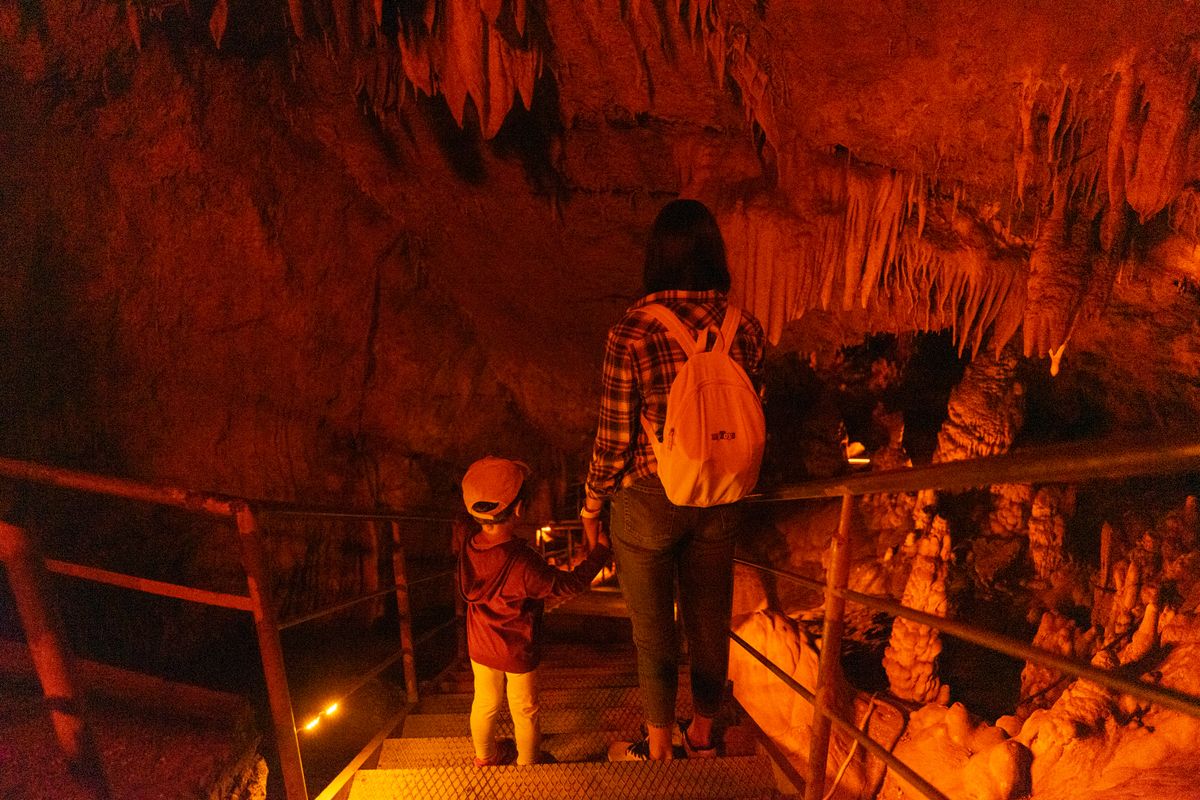
Entering the Gruta de las Maravillas is like stepping into a submerged cathedral. The visit covers a kilometre-long stretch of illuminated galleries — around twelve hundred metres — but the cave extends much further, with over two kilometres of charted passageways beneath the village of Aracena. Yes, you read that right: beneath the town centre. Few caves in the world can boast of sitting directly under the houses of an inhabited village.
Twelve Chambers, Twelve Different Worlds
The tourist route passes through twelve main chambers, each with a distinct character. The Sala de los Brillantes (Chamber of Brilliance) lives up to its name: its walls are coated with calcite flows that glitter under the light as if someone had dusted icing sugar over the stone. The Sala de las Conchas (Chamber of Shells) houses formations that recall giant seashells. The Gran Sala de las Estalactitas (Great Chamber of Stalactites), with columns stretching from floor to ceiling and merging into a single body, is the climax of the tour.
But if there’s something that truly leaves you speechless, it’s the Lago de las Sultanas (Lake of the Sultanas). An underground lake of still, crystal-clear waters — so still and so clear that for a few seconds you doubt where the cave ends and the reflection begins. The optical effect is so perfect that the chamber seems to fold in on itself. It’s not large — barely twenty metres across — but the sensation of depth it creates is hypnotic.
The speleothems are overwhelmingly varied: stalactites, stalagmites, columns, flowstones, gour pools, draperies, and helictites. The helictites are formations that appear to defy gravity, growing sideways and in every direction as if the laws of physics didn’t apply underground.
A Stroll Through History
The grotto is not just geology. Archaeological remains have been found inside that speak of human occupation since the Neolithic. There are also schematic cave paintings in some areas, evidence that those early people not only inhabited the caves but turned them into sanctuaries.
A curiosity few know about: during the Spanish Civil War, the grotto served as a shelter for the people of Aracena. The interior climate, constant all year round (around sixteen degrees), and the natural protection of the rock made it the perfect hiding place.
The guided tour lasts approximately forty-five minutes and is fully adapted. This is not an adventure cave: the path is paved, there are handrails, and the artificial lighting is designed to highlight the formations without damaging them. Children and older visitors can manage without difficulty, though it’s worth bringing a jacket even if it’s forty degrees outside. Inside, it’s always autumn.
Aracena: Much More Than the Grotto
Taking advantage of a visit to the grotto to explore Aracena is a no-brainer. The ruined Templar castle that crowns the village, the 16th-century priory church, and the arcaded Plaza Mayor — one of the loveliest in the sierra — deserve a leisurely stroll. If you like Iberian ham, you’re on sacred ground here: Aracena is the unofficial capital of the Jabugo Designation of Origin. In any of its bars you can enjoy bellota ham that melts in your mouth.
If you’re planning your trip, check our guide to Huelva province with more routes through the sierra, the coast, and Doñana. And if hiking appeals to you, the GR-48 through Sierra Morena passes very close by and is a wonderful way to discover the wildest side of Andalusia.
Frequently Asked Questions
How much does entry to the Gruta de las Maravillas cost?
The price is around ten euros for adults, with reduced fares for children, seniors, and groups. It’s highly advisable to book in advance, especially on weekends and bank holidays, as slots per tour are limited and sell out quickly.
Is it accessible for people with reduced mobility?
Partially. Most of the route has gentle gradients and paved flooring, but there are some stretches with stairs. It’s best to check with the Aracena tourist office beforehand to confirm the current state of accessibility.
Can you take photos inside the grotto?
Yes, photography without flash is permitted. Flash is banned because it alters the cave’s ecosystem and encourages algae growth on the calcite formations.
Find places to stay in Huelva
Compare hotels, apartments, and stays with free cancellation on many bookings.