
Medina Azahara: A Love Story Over 1,000 Years Old
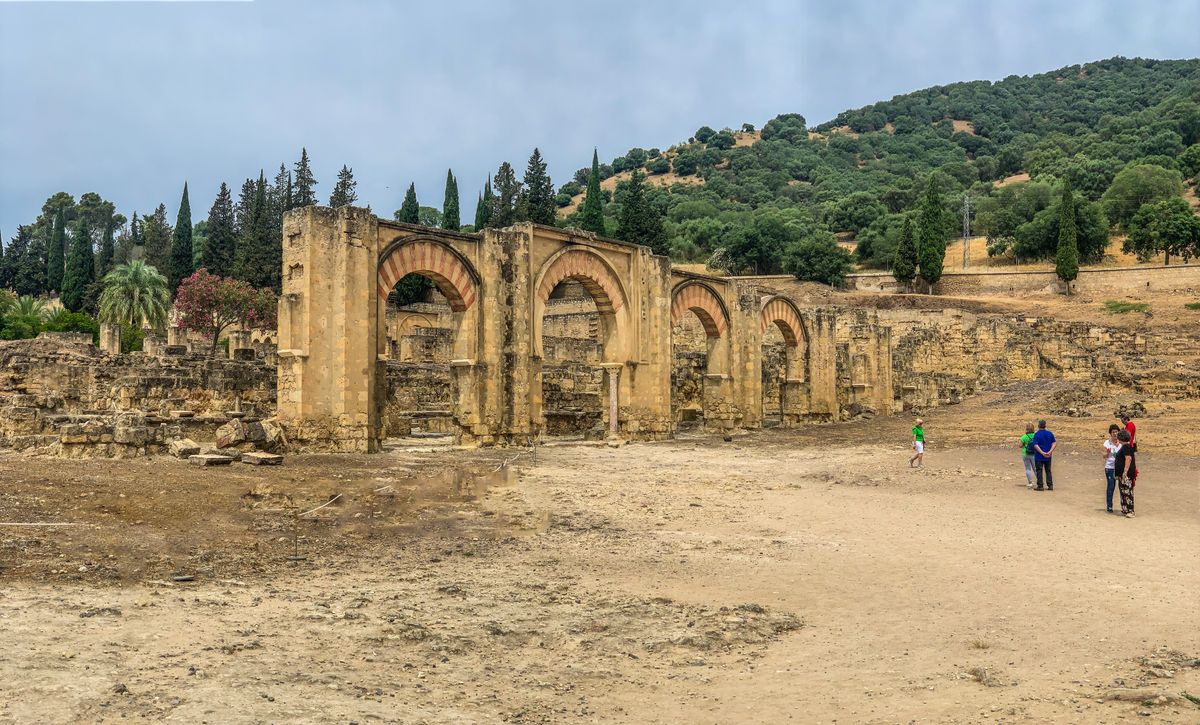
Legend has it that the caliph’s love for his favourite al-Zahrá was so great that he promised to build her the most magnificent city eyes had ever seen. A city that would bear the name Madinat al-Zahrá — the City of Azahara, the shining city, the city of the flower.
For her they would use the most precious materials: ebony, marble, ivory, and gemstones. The most beautiful city in the West would be born of love: a place where pleasure and beauty lived alongside the power of the caliphate, a place so impressive it would prove the caliph’s superiority over his enemies.
The Construction: 10,000 men over 25 years
It was Abd al-Rahman III, in the 10th century, who chose the site at the foot of the Córdoba mountain range, facing the Guadalquivir valley and laid out north to south, taking advantage of the slope of the land. From his palace he would gaze out each morning at the greatest city of the West.
In just 25 years, starting in 936, he raised — thanks to the labour of more than 10,000 men — an incredible paradise. He moved his entire court there: Medina Azahara would be the capital of the caliphate, the royal residence, and the seat of government.
The city was laid out across three rectangular terraces, covering more than 100 hectares and surrounded by an impressive wall. On the highest ground, isolated from the other buildings, was the palace of Abd al-Rahman III. On the middle terrace were the government buildings, other palaces, and the reception halls. Between the middle and lower terraces stood the mosque, while the lower terrace housed most of the residential dwellings.
An Ephemeral City
And yet Medina Azahara, perhaps the most beautiful of all Andalusian cities, seemed doomed to vanish. Just 75 years after its foundation, civil war erupted in al-Andalus. Looting, fighting, and fire destroyed the most beautiful city in the West. Ravaged by Berber forces, it was forgotten and turned into a quarry until vegetation covered it over.
It was not until the 19th century that the heap of ruins was identified as Medina Azahara. Excavation and restoration did not begin until 1910.
Despite centuries of plundering and neglect, and thanks to the formidable work of restorers, visiting it today sets the imagination soaring. You can effortlessly picture the palace receptions, the moment the troops set out for battle, or the rhythm of daily life.
What to See at Medina Azahara
While the entire complex is remarkable, do not miss:
- The House of Yafar: the residence of Abd al-Rahman III’s prime minister.
- The Salón Rico: the great reception hall, with its horseshoe arches and arabesque decoration. Foreign embassies were received here.
- The Alcobas Building: a possible residential area of the caliph.
- The Aljama Mosque: with an unusual orientation that sets it apart from the rest of the complex.
The Medina Azahara Museum
The new museum, winner of the Aga Khan Award for Architecture — a prestigious international prize awarded to the foremost projects in the Muslim world — houses a magnificent collection of remains from the palace-city. Its audiovisual displays and interactive graphics bring the city’s evolution to life in a highly engaging way.
Practical Information
How to get there: The site is located at kilometre 5.5 on the Palma del Río road (C-431), 8 kilometres from Córdoba city centre. Buses run by the Córdoba Tourism Consortium make the journey to the ancient palace-city. There is also a large free car park if you go by car.
Tickets: It’s advisable to buy them in advance on the official website of the archaeological site. The ticket includes access to the site and the museum, plus the shuttle bus that takes you from the car park up to the entrance.
Medina Azahara was an ephemeral city that endures through time, like the beautiful legend that assures us the most beautiful city in the West came into being through a caliph’s love for a girl with a flower’s name.
If you’re interested in Caliphal art, you cannot miss the Mosque–Cathedral of Córdoba, the other great monument of Umayyad splendour in al-Andalus.
Frequently Asked Questions
Is it worth going even though it’s in ruins?
Absolutely. What remains is far more than you might expect. The Salón Rico and the palatial area are well preserved, and the museum helps form a very precise idea of what the city was like at its peak. It’s not an inhospitable archaeological site; it’s well cared for and well set up for visitors.
How long do I need for the visit?
Between the museum and the site, allow two and a half to three hours. The shuttle bus takes a few minutes to go up. If you go in summer, bring water and sun protection: there’s little shade on the outdoor route.
Are there guided tours?
Yes, the site offers guided tours at set times. Check the official website for schedules and to book. You can also explore on your own with an audio guide or the information panels found in each area.
Related Articles
- The Mosque–Cathedral of Córdoba: The Forest of Columns — The most visited monument in Córdoba.
- Córdoba — Guide to the Caliphal city: what to see and where to go for tapas.
- The Generalife: The Sultan’s Garden — The Nasrid leisure villa in Granada.
Find places to stay in Córdoba
Compare hotels, apartments, and stays with free cancellation on many bookings.