
The Paseo de los Tristes: One of the Most Beautiful Streets in the World
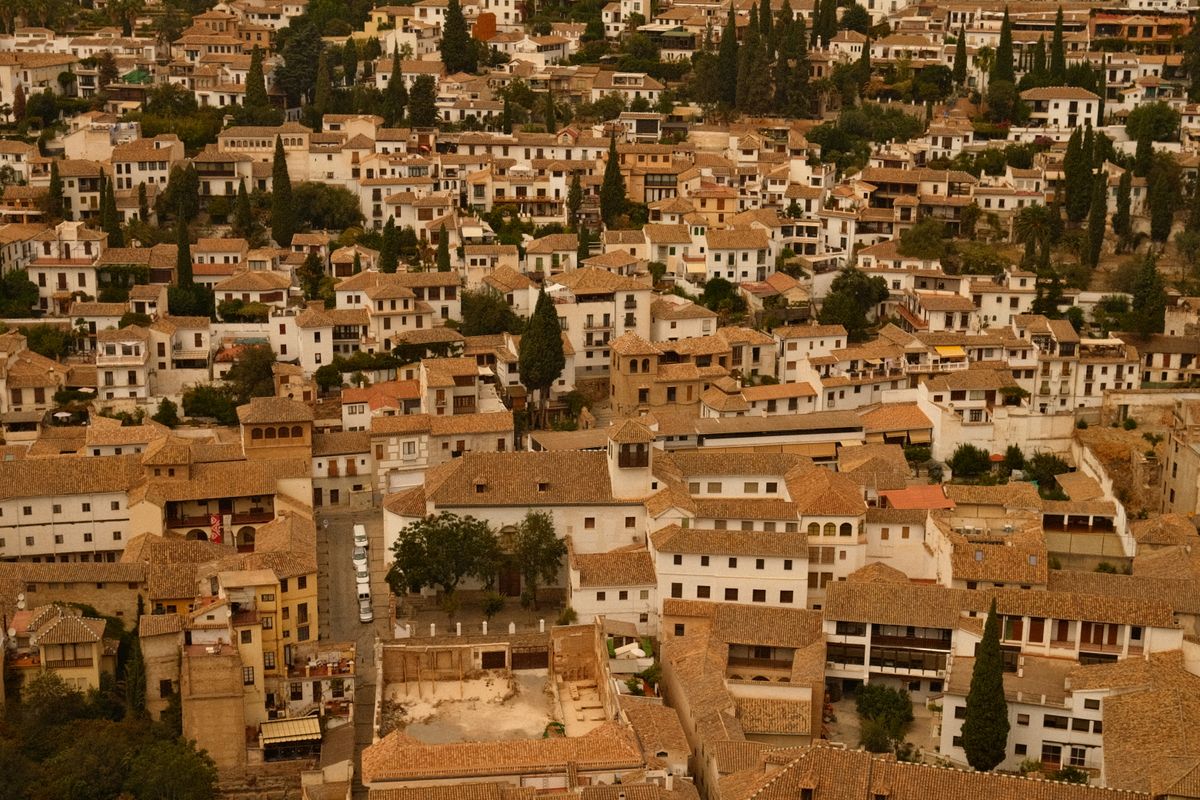
Granada’s Happiest Street Has the Most Melancholy Name
Walking through Granada is always magical. But in this incredible city that enchants everyone, there are places that dazzle just a little more than usual. One of those places, probably the one that dazzles most of all, is the Paseo de los Tristes.
Its official name is Paseo del Padre Manjón — which, I should warn you, no one in Granada actually calls it — but everyone knows it as the Paseo de los Tristes. And there’s a story behind it.
Why is it called that?
You need to go back a bit, but the explanation is simpler than it seems. The Paseo de los Tristes was the route along which funeral processions wound their way from the city to the San José cemetery, on the far side of the Darro, on the Sabika hill where the Alhambra stands. It was, literally, a sad walk.
But don’t be fooled by the name. If there’s one corner of Granada that radiates joy for living, it’s this one. Because today the Paseo de los Tristes is the epicentre of tapas-hopping, of summer nights with impromptu guitars under the open sky, of couples strolling hand in hand without hurry, gazing at the most beautiful monument in Europe lit up.
The paradox is perfect: the happiest street in Granada has the most melancholy name.
A Balcony Over the Alhambra
The Paseo de los Tristes runs along the banks of the Darro River, between two historic bridges — the Puente de las Chirimías and the Puente del Aljibillo — right at the foot of the Sabika hill. From any of its stone benches, your eyes will be drawn irresistibly upward. And there she is: the Alhambra, silhouetted against the sky, with the Torre de la Vela watching the horizon and the snow-capped Sierra Nevada behind, if you visit in winter.
It’s one of the most photographed views in Europe, and for good reason. No Instagram filter can do justice to what you see from this promenade. The light of Granada — that light they say is unlike anywhere else on earth — becomes almost tangible here: golden at dusk, silver under the moon, reddish when the sun slips behind the Generalife.
If you want to learn more about the monument that gazes down on this promenade, don’t miss our article on The Alhambra, the Red Castle, where we tell its full story. And if you’d like to round off your visit with the gardens, the Generalife is just a stroll away.
What You See as You Walk
The Paseo de los Tristes isn’t very long — barely four hundred metres — but it’s packed with details worth your attention. As you start walking from Plaza Nueva towards the Albaicín, the first thing you encounter is the Puente de las Chirimías, from the 17th century, so named because this wind instrument was played from the bridge during religious celebrations.
On your left, climbing into the Albaicín, the most authentic alleyways of Granada open up: the Cuesta del Chapiz, the path towards Sacromonte. If you carry on straight ahead, the promenade widens and the bar terraces appear. Life here moves at a different rhythm.
To your right, the Darro River, which flows down from the Sierra Nevada through the city, murmurs among the stones. In spring, with the snowmelt, the sound of the water envelops everything. It’s a constant murmur that accompanies you along the entire walk, and on summer nights it mingles with the conversation and laughter spilling from the taverns.
At the far end of the promenade, the Puente del Aljibillo takes you straight to the Churra neighbourhood, right in the lower Albaicín. From here you can climb towards the Mirador de San Nicolás — the most famous viewpoint in Granada — or lose yourself in the heady labyrinth of whitewashed streets of the old Arab quarter.
A Corner of Flamenco and Literature
The Paseo de los Tristes has always been a magnet for artists and bohemians. The Russian composer Mikhail Glinka, who lived in Granada for a spell in the 19th century, used to sit here listening to the water of the Darro. From those afternoons came his famous piece Memories of Castile, inspired by a jota he heard from a Granadine gypsy.
And in the 20th century, the cafés and bars along the promenade were a refuge for Granada’s intellectual crowd. The most celebrated of all is the Restaurante Las Tomasas, housed in what was the Carmen de los Chapiteles, an old Nasrid mansion. Its terrace, perched above the Sacromonte path, has the best views in the whole area. That said, the prices match the panorama.
More affordable and also full of charm is La Ninfa, whose tables practically touch the edge of the Darro. Perfect for a beer at sunset as the Alhambra begins to light up.
Beyond the Promenade
If you want to keep exploring the Albaicín, the options are endless. But one that never fails is to cross the Puente del Aljibillo and climb slowly, almost aimlessly, up the Cuesta del Chapiz. Halfway up is the Palacio de los Córdova, a Renaissance building that now houses the Municipal Archive, with gardens that are an absolute delight.
Long before any of this, if you’re planning your getaway from top to bottom, don’t miss our complete guide to Granada, where you’ll find all the monuments, the neighbourhoods, the best restaurants, and practical information for a well-rounded visit.
Frequently Asked Questions
How do you get to the Paseo de los Tristes?
The easiest way is to walk from Plaza Nueva, following the Carrera del Darro. It’s barely ten minutes on foot. It’s a flat and pleasant walk that is worth taking in its own right, because the Carrera del Darro is another one of those streets that steal your heart. You can also take the C1 minibus from the city centre.
What is the best time to visit?
Sunset, without a doubt. As the sun begins to set, the Alhambra is tinged red and gold, and as darkness falls it lights up stone by stone. It’s one of those free shows you remember for a lifetime. In summer, from nine o’clock onwards, the terraces are at their best.
Is it suitable for children?
Perfectly. The walk is flat, well lit, and there’s no traffic. Children love it because there’s space to run around, you can hear the river, and there’s always something to look at. The bar terraces are family-friendly and many have plenty of space.
Find places to stay in Granada
Compare hotels, apartments, and stays with free cancellation on many bookings.