
Bolonia Beach: Dive Into History
Where the Roman Empire Left Its Mark Beside the Sea
We can barely imagine how tough it was to travel two thousand years ago. The landscape is still the same, the heat and the cold identical, but the means of transport were not. And yet, as you climb the winding roads leading to Bolonia, you begin to understand the excitement those ancient travellers felt when they spotted, set in a perfect cove, the city of Baelo Claudia.
Today we arrive as visitors, to take a dip in its incredible beach or to wander through the ruins. But there was a time when thousands of people came here every summer to work: slaves and free men, seasonal labourers in one of the industries that brought the most fame to Baetica throughout the Roman Empire: garum.
A Beach Where You Can Touch History
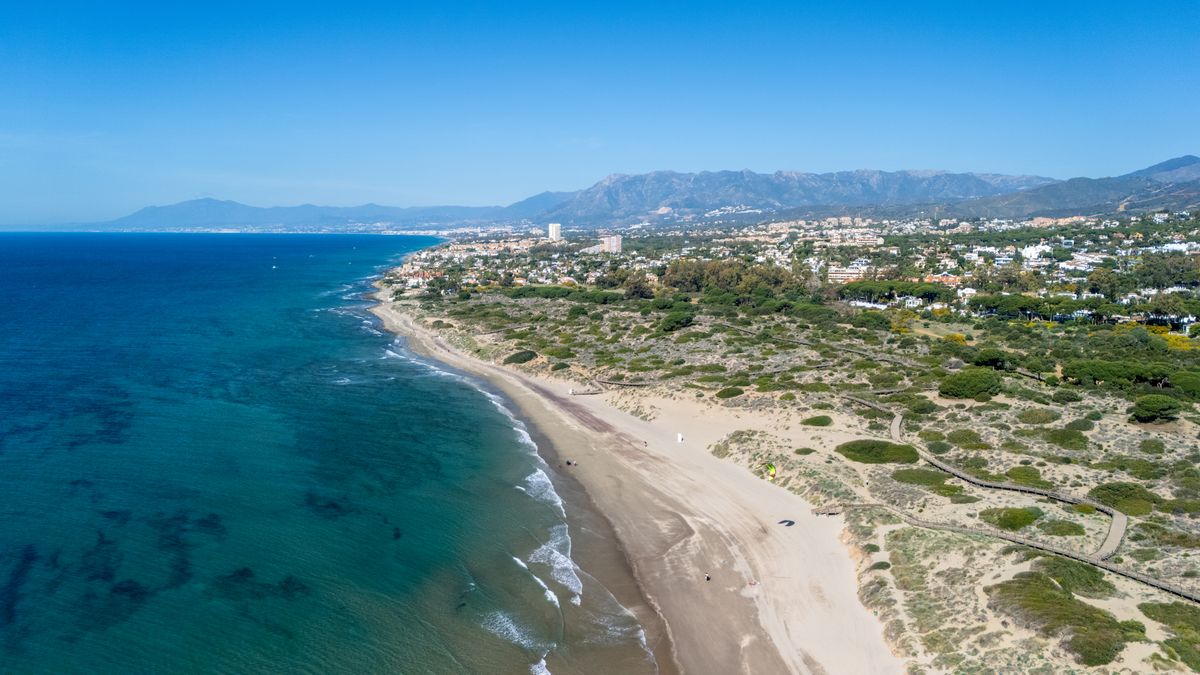
Many say that, with its immense dune and turquoise water, Bolonia is one of the most beautiful beaches in Andalusia. Others will say in Spain. What’s certain is that nowhere else will you find such a perfect union of an unspoilt landscape, remarkably well-preserved Roman remains, and a sea that, like few others, encapsulates the connection between the peoples of the Mediterranean.
The Bolonia cove, in Cádiz province, within the Strait of Gibraltar Natural Park, has become over the centuries one of the most important Roman archaeological sites in Andalusia. If you’re interested in exploring more corners of the province, check the complete guide to Cádiz with everything you can’t miss.
Baelo Claudia: A Roman City by the Sea
Baelo Claudia was one of the most important cities in Roman Baetica. It was born at the end of the 2nd century BC on an earlier Phoenician settlement — Bailo — and reached its peak between the 1st century BC and the 2nd century AD. Its decline began after a terrible tsunami knocked down its most important buildings during the crisis of the 3rd century. Raids by Barbary and European pirates pushed it almost to extinction, and although it experienced a slight revival, it was abandoned for good in the 7th century.
In no other Roman site on the Iberian Peninsula is it possible to gain such a complete picture of Roman urban planning as here. That is where its true value lies, heightened by the spectacular landscape that surrounds it.
Its main industry was the production of preserves and salted fish. This is where the famed garum was made — a fermented fish paste that we struggle to imagine today and that delighted the most refined palates of the era. Trade with the vessels crossing the Pillars of Hercules — the present-day Strait of Gibraltar — did the rest.
Roman Urban Planning at Its Finest
We won’t dwell on every detail of the layout, but the urbanistic wonder must be pointed out: main streets intersecting to form a cross, at the centre of which stood the Forum, with its original paving slabs from Tarifa preserved since the 1st century. The main public buildings were arranged around it.
The site preserves the elements that defined a Roman city: the wall with over forty watchtowers, the Curia (local senate), the municipal archive, the Judicial Basilica — presided over by a statue of the emperor Trajan over three metres tall — and the Theatre, which is the largest building in the complex.
There were four great temples: three dedicated to the Capitoline Triad (Jupiter, Juno, and Minerva) and one dedicated to the Egyptian goddess Isis, testimony to the Isiac cult on the peninsula. Also preserved are the tabernae (shops), the macellum (market) with its fourteen stalls, and the baths.
The industrial area, with the remains of the garum factories, aqueducts, and sewer system, completes an extraordinarily faithful picture of what this city was. Baelo Claudia was declared a Site of Cultural Interest in 1925 and since 2007 has had a museum designed by the architect Guillermo Vázquez Consuegra.
How to Get There
Bolonia is a few kilometres from Tarifa. The hamlet has few places to stay — sometimes everything is fully booked — but Tarifa has more hotels and is only a stone’s throw away.
To get there, take the N-340 (Málaga-Cádiz). If you’re coming towards Tarifa, past the Facinas turn-off, or if you’re coming from Tarifa towards Cádiz, at km 70.2 you’ll find the turn-off to Bolonia. From there you climb up to the cove, where signs will guide you to the ruins and the beach.
Also check our guide to beaches in Andalusia to discover other gems along the Cádiz coast.
Frequently Asked Questions
Is Baelo Claudia worth a visit if I’m not into archaeology?
Yes. The combination of the unspoilt beach, the dune, the views of the Strait, and the fact of walking among two-thousand-year-old ruins just metres from the water makes the experience worthwhile even if history isn’t your thing.
Can you swim at Bolonia beach after visiting the ruins?
Yes. The beach is right alongside the archaeological site. In fact, it’s one of the most recommendable plans: a cultural visit in the morning and a swim in the afternoon. The water is cold because of the Atlantic influence, but the beach is stunning.
How long does it take to visit the site?
Between an hour and a half and two hours, depending on your pace. If you like reading the information panels and lingering over the details, allow two and a half hours. Entry to the museum is included and well worth it.
Find places to stay in Cádiz
Compare hotels, apartments, and stays with free cancellation on many bookings.