
The Watchtowers of Cádiz: The Surprise of the Expected
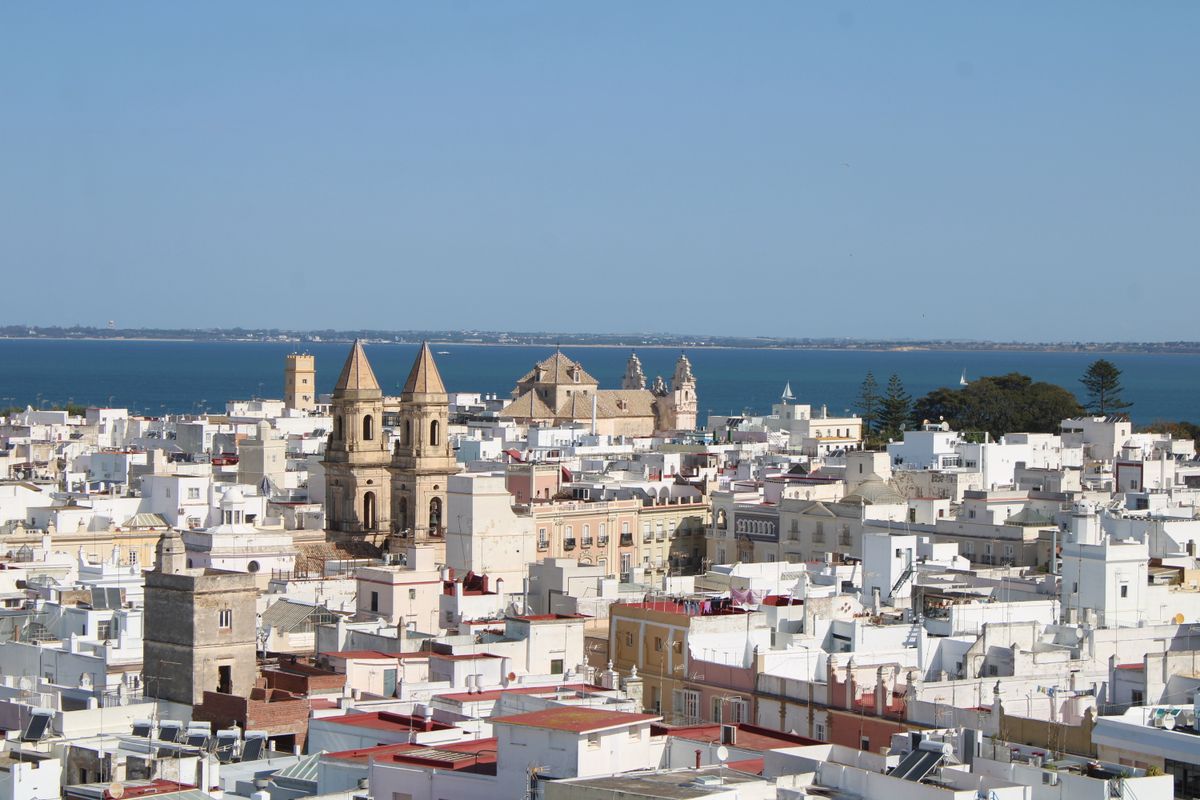
The Commercial Ambition That Reshaped Cádiz’s Skyline
It’s easy to imagine the excitement of Cádiz’s merchants when, after months of waiting, they spotted from their homes the ship that would save their businesses, bring their families, or carry news from across the seas.
But the city kept growing. The once small, close-knit Cádiz grew denser, and it became harder and harder to see the sea. They climbed to the rooftops and still struggled to scan the horizon. It was then that the inventive Gaditano mind, with its characteristic quick-wittedness, found a solution: of prodigious aesthetic, designed for a problem of difficult resolution.
Every merchant wanted to see when his ship was arriving. Besides being big news, it would give him an edge in the market. And at the same time, the first thing travellers would spot from their ships were those lookout towers that would make the ancient city of Cádiz famous.
The Symbol of Cádiz’s Commercial Splendour
The watchtowers are one of the most distinctive elements of Cádiz architecture, lending the city a certain oriental air because of the North African inspiration behind these structures. They came into fashion — more out of necessity than taste — from the mid-17th century onwards, when Cádiz was the official port of entry for all goods arriving from the Americas. In 1792, municipal bylaws banned their construction because of their relative impracticality and the danger of collapse.
At one point there were 160 towers. Today around 126 remain. In the Museo de las Cortes, there’s a model of Cádiz in 1777 where you can see them all.
In the 18th century, no Gaditano merchant who built his house — usually in the western district, because of its proximity to the harbour entrance — failed to add a lookout tower. The towers of Cádiz were the result of the prestige and the boom that the city attained through the Indies trade.
Cádiz became one of the most cosmopolitan cities in Europe, home to English, Dutch, and Italian merchants. The standard of living was extraordinarily high. And although the monopoly with the Americas ended in 1765, the city’s magnificent location and the shrewdness of Cádiz’s merchants kept trade going even through turbulent times.
Four Types of Towers
When you roam the streets of Cádiz and look up, on buildings that once belonged to old-money families, you’ll spot these curious constructions. There are four types:
- Terrace Towers (Torres de Terraza): the oldest surviving ones.
- Sentry-Box Towers (Torres de Garita): featuring a sentry box perched on a usually square two-storey tower.
- Armchair Towers (Torres de Sillón): the most alike to one another, solving their lookout function in a practical way.
- Mixed Towers (Torres Mixtas): a fusion of the armchair and sentry-box types, adding extra height by placing a sentry box on top of the armchair tower’s upper section.
The exception is a tower on Calle José del Toro, the only one with an octagonal floor plan. It’s called “La Bella Escondida” (The Hidden Beauty) because you can’t see it from the street.
Torre Tavira, the Tallest
A must-see is the Torre Tavira (18th century). At 45 metres, it is the tallest in the city and offers the finest views. It’s a beautiful Baroque watchtower, designated the official port watchtower in 1778 — the name comes from the first watchman, navy lieutenant Antonio Tavira — and stands on the corner of Calle Marqués del Real Tesoro and Calle Sacramento.
Today it’s an exhibition space featuring the famous Camera Obscura: a kind of lens that allows you to see the city in real time as if you were inside an old-fashioned camera. The experience is well worth it.
If you’re interested in the atmosphere of Cádiz back in that era, Pérez-Reverte captures it meticulously in his novel El Asedio (The Siege).
Wandering through Cádiz is always a joy: its views, its architecture, and the cheerfulness of its people. But never forget to look up. Its towers are watching over you.
For more information about the city, check our complete guide to Cádiz, and if you enjoy unusual architecture, don’t miss the white villages of the province.
Frequently Asked Questions
How much does it cost to go up the Torre Tavira?
General admission costs around 7 euros and includes the Camera Obscura visit, which is done in small groups with sessions approximately every half hour. Discounts are available for students and retirees.
Why are there so many towers in Cádiz?
Because during the 17th and 18th centuries, with the monopoly on trade with the Americas, every Gaditano merchant wanted to see from his own home when his ship was arriving. At one point there were 160 watchtowers. Today 126 remain.
Can you visit other towers besides Torre Tavira?
Most are privately owned and form part of residential homes. Torre Tavira is the only one fitted out for tourist visits with access to the roof terrace and the Camera Obscura.
Find places to stay in Cádiz
Compare hotels, apartments, and stays with free cancellation on many bookings.