
Úbeda: Renaissance Splendour
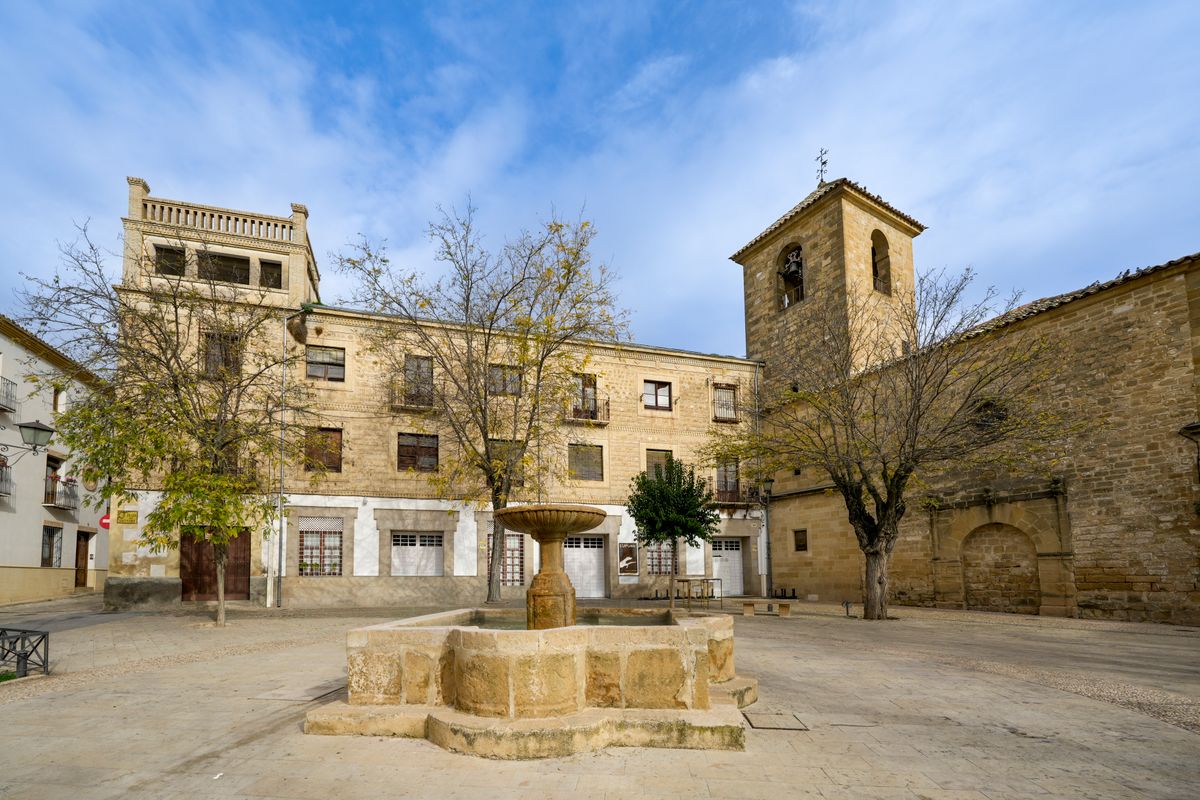
How a Secretary to Charles I Turned His Home Town Into a Masterpiece
“Úbeda, queen and gypsy.” — Antonio Machado
There is something different about Úbeda. A halo, a mist that gives the city a special touch — more intimate, deeper. Amid the haze the Guadalquivir raises at the hour of the morning dew, a city emerges that impresses everyone who gets to know it: spectacular and magical, sometimes overwhelming in the sheer quantity and beauty of its buildings and landscapes.
Úbeda is the cornerstone of the Andalusian Renaissance route. Alongside Baeza, it forms part of an itinerary whose unifying thread is this artistic style and the creations that the noble patrons of the 16th century commissioned from artists such as Andrés de Vandelvira and Diego de Siloé.
Plaza Vázquez de Molina: The Heart of the Renaissance
When you stroll through Plaza Vázquez de Molina, you are transported on a magical journey to Italy of the Cinquecento from the very heart of Andalusia. It is the centre of Úbeda’s historic quarter, where the Renaissance reaches its highest heights in Spain.
Nine national monuments cluster around it. Its generous proportions, its open character, and its many viewpoints never stop surprising you, even if you visit over several days and at different times of day.
Presiding over the square from the southeast is the Sacra Capilla del Salvador del Mundo, the work of Siloé and Vandelvira, with a floor plan based on the Pantheon in Rome and a magnificent altarpiece by Berruguete. It is the funerary monument of Francisco de los Cobos, one of the great driving forces behind Úbeda’s splendour. His story is remarkable: someone who was never destined for it rose to become secretary to Charles I and Philip II, with levels of power that you only truly grasp when you see his funerary monument.
Beside the chapel stands the Hospital de los Honrados Viejos del Salvador and the Palacio de Juan Vázquez de Molina — better known as the Casa de las Cadenas — home to the town hall, which makes an impact with its sobriety and elegance.
Opposite is the Colegiata de Santa María de los Reales Alcázares, built atop an old congregational mosque. After an enormously painstaking restoration it now shines in all its splendour. If its cloister rings a bell as you walk through it, it’s because scenes from the film Alatriste were shot here — though frankly, the film could have been shot on any corner of Úbeda, such is the respect with which the heritage has been preserved.
Next to the Colegiata, the Bishop’s Prison, and opposite, the magnificent Palacio del Deán Ortega, now a Parador de Turismo. The square’s Renaissance fountain, a gift from the Venetian Senate to Francisco de los Cobos, sometimes makes you think you’ve stepped into another century.
More Gems: The Hospital de Santiago
Another essential piece is the imposing Hospital de Santiago, commissioned by Bishop Diego de los Cobos as a hospital for the poor, a palace, and a church-pantheon. Its tower crowned with tiles, its monumental staircase, and its exceptional frescoes make it one of the pinnacles of the Spanish Renaissance.
As you venture deeper into the city, through streets of medieval layout with echoes of the Mozarabic past, you pass elegant palace facades, columned courtyards, and emblazoned stately homes of solid stone worked by expert masons.
From al-Ándalus Splendour to the Renaissance
Úbeda, along with Baeza, is one of those exceptional cases where the greatest splendour came after the Reconquista, unlike cities such as Granada. The 16th century was Úbeda’s century.
The former Ubbadat of the Muslims, founded by Abd al-Rahman II, became one of the main hubs of prosperity in al-Ándalus after the conquest by Ferdinand III the Saint. Its frontier character between Granada and Castile meant the Castilian monarchs granted it numerous privileges.
Although Andalusian heritage can be seen as you walk its streets, the dominance of 16th-century buildings is so overwhelming that the beautiful examples of Mudéjar houses are sometimes overlooked. Perhaps where that heritage is most recognisable is in its famous ceramics and pottery — a national prize was recently awarded to one of its best-known potters — and in the artisanal working of esparto grass.
Much of the walled enclosure survives, with the Puerta de Granada, the Puerta del Sabiote, and the reconstructed Puerta de Santa Lucía. The Clock Tower and the Octagonal Tower — the only detached tower on the walls — have also endured.
Úbeda and Baeza have been World Heritage Sites since 2003, recognised as the clearest example of Spanish Humanist Renaissance architecture.
Walk, lose yourself in Úbeda, contemplate its palaces, gaze out over the landscape from its viewpoints, and enjoy this true inland paradise.
If you want to keep exploring the province, check our complete guide to Jaén. And if the Renaissance interests you, don’t miss Baeza, barely fifteen minutes away by car.
Frequently Asked Questions
How much time do you need to see Úbeda?
A full day is ideal to explore Plaza Vázquez de Molina and the Hospital de Santiago at a relaxed pace. If you want to see Baeza too — just nine kilometres away — two days is best.
Is the Parador de Úbeda worth it?
Yes. The Parador occupies the Palacio del Deán Ortega, a 16th-century Renaissance building right on Plaza Vázquez de Molina. Staying there means sleeping inside a monument.
Why is there so much Renaissance architecture in Úbeda and not as much Islamic art?
Because unlike cities such as Granada, Úbeda reached its peak after the Christian Reconquest. The 16th century, with patrons like Francisco de los Cobos — secretary to Charles I — was Úbeda’s true golden age.
Find places to stay in Jaén
Compare hotels, apartments, and stays with free cancellation on many bookings.